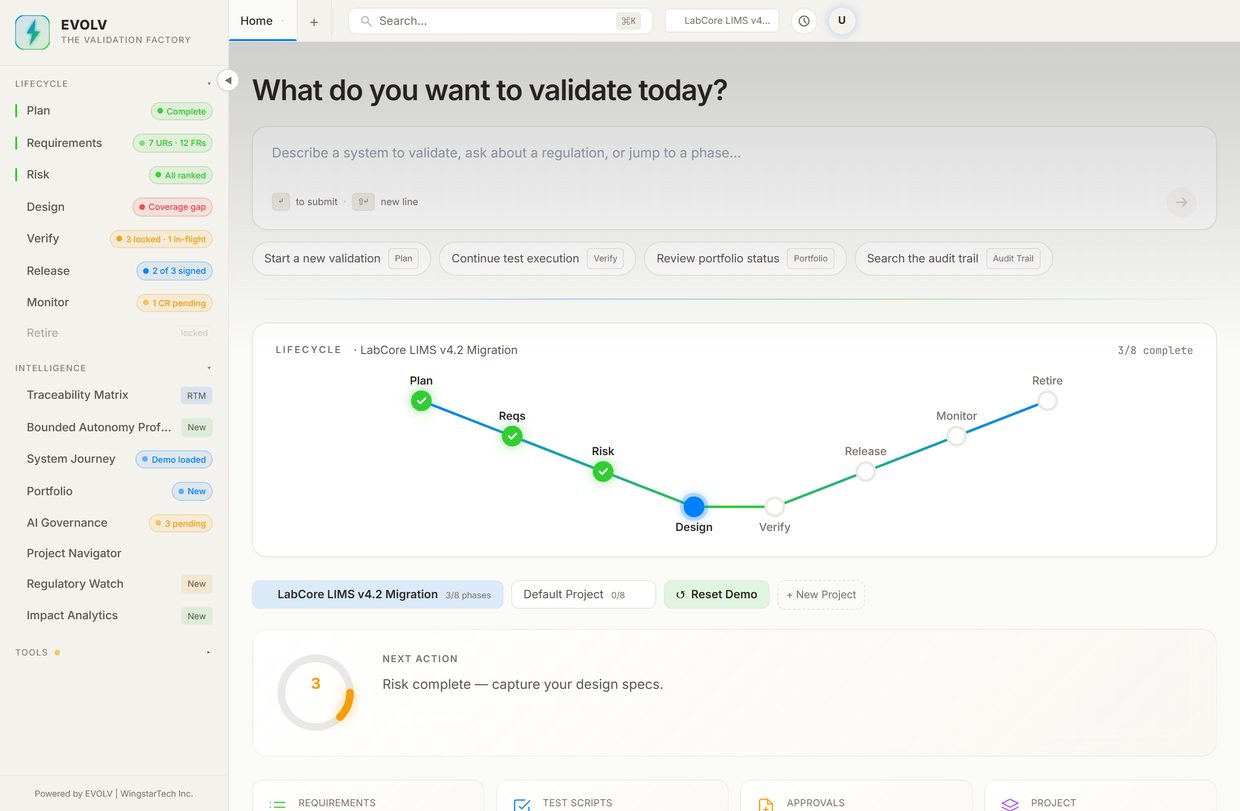
EVOLV runs the full GAMP 5 lifecycle — AI drafts requirements, risk, and tests; an independent agent verifies each one against the regulatory corpus; every output is human-signed and re-derivable in an inspection.
Every validation vendor shows you customer logos. We're early — so we show you the evidence instead. It's the harder thing to fake, and the only thing an inspector actually accepts.
A signed 12-page validation package — Plan, IQ, OQ, and a 253-requirement traceability matrix — generated by our own methodology, eval suite executed live.
The five hard exclusion rules run in your browser. Type a use case; watch it pass or get refused, with the regulation cited. No form, no call.
Hash-chained logging plus a Logic Archive per decision. "Show me how the AI decided that" has a literal, replayable answer.
136 deterministic checks gate CI on every push. When they find a hole in our own rules — they have — we publish it.
The GAMP 5 V-model, run as a living system — from a one-paragraph brief to a signed Validation Summary Report.

Every phase shows its real state — done, in-flight, or blocked. The living traceability matrix updates itself as tests run and changes land, so "are we still validated?" is a number, not a memory.
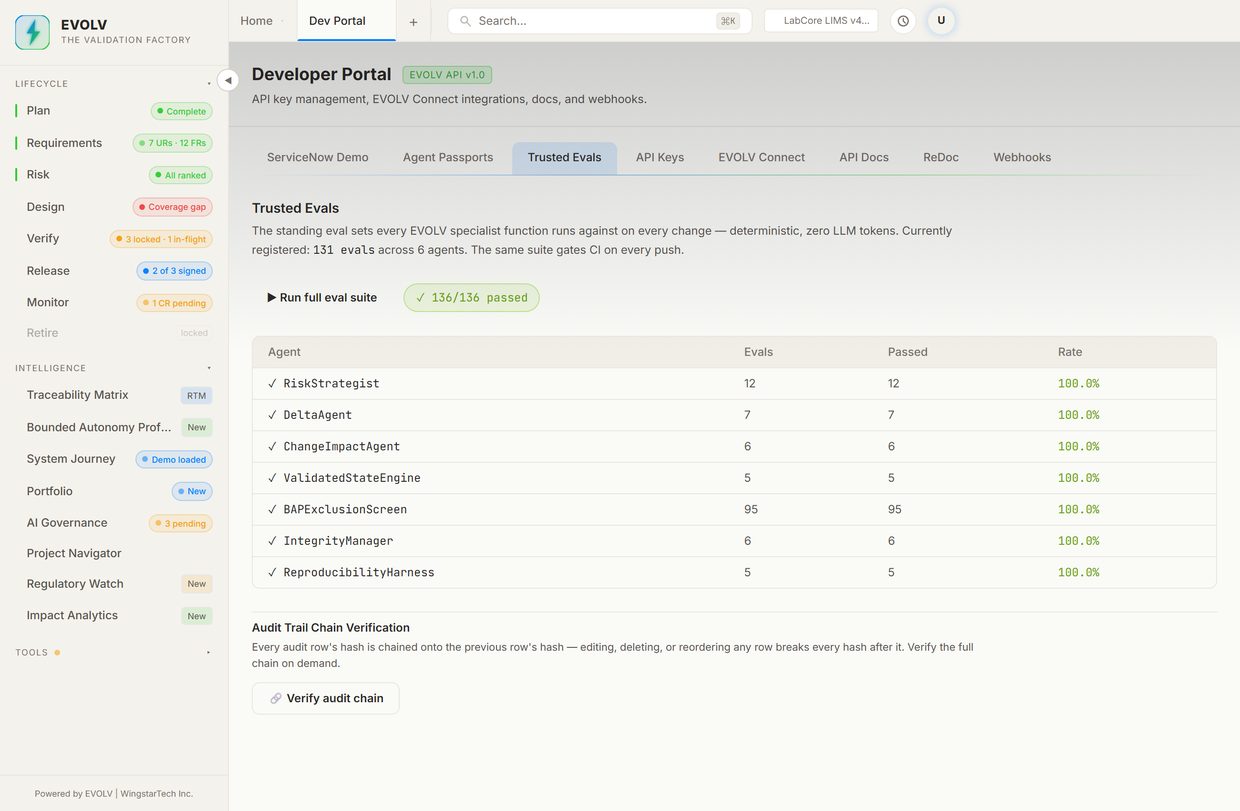
Every specialist function has a standing test set that gates CI on every push. Run all 136 from the Dev Portal, or bring your own golden set and test us on your requirements — same engine, same report.

Describe how you want to use AI in your GxP environment. This runs the same five hard-exclusion rules our Bounded Autonomy Profile engine applies — deterministic, no data leaves this page.
This isn't a "needs more controls" verdict — it's a shape problem. No tier of paperwork rescues it. The good news: most excluded use cases have a nearby re-scoped shape that works (AI proposes, human signs).
Now the interesting question — which assurance tier does it need? Pick the closest description:
Reading this list is the fastest way to understand how EVOLV treats risk. These are structural exclusions — no amount of controls rescues them.
21 CFR Part 11 §11.50 binds a signature to a named human. An AI cannot be the named signatory.
Batch release is a Qualified Person responsibility under GMP. It cannot be delegated to an AI in any shape.
CAPA closure requires independent review and effectiveness assessment under 21 CFR §820.100.
That's FDA SaMD territory — a different product with a different regulatory pathway. Not ours.
Every modification to a controlled record carries an accountable signature — 21 CFR §11.10(e).
A vendor who never says no to your use case isn't assessing it. The exclusion rules run live in the screener above — try to get past them.
Most validation software is built by people who left the industry years ago — or by companies where nobody writing the code has ever sat through an inspection. I'm not that.
I still do CSV. I've used ValGenesis, Kneat, Veeva, Polarion — and hit the wall each one leaves you at. I've worked across big pharma, mid-size, and startups, so I've seen the whole landscape, not one corner of it. And I've taught it: 11 courses, 10,000+ CSV professionals across the globe.
I built EVOLV because I wanted the tool I kept wishing existed — fast and defensible, built as if the auditor is the most important person in the room. Not a headless product. If you want to know why it works the way it does, the answer is simple: because I've had to defend this work myself.
Bring one real requirement from your current validation backlog. We'll draft it, verify it, risk-rank it, and hand you the signed PDF — live.